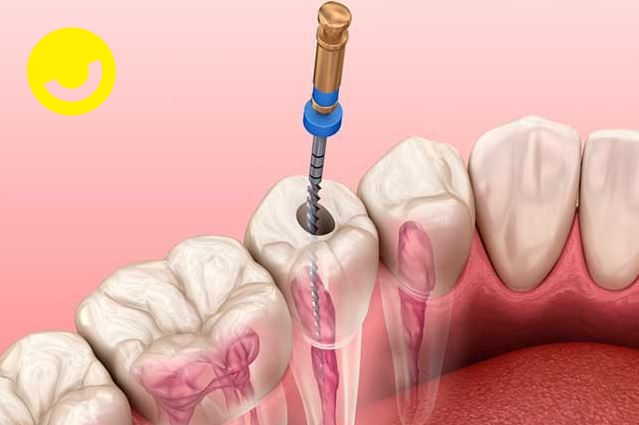
Endodontics
This treatment involves the extraction of the tooth’s pulp, a small, thread-like tissue found in the center of the root canal. Once the pulp becomes dead, diseased, or damaged, it is removed; the remaining space is cleaned, reshaped, and filled. This procedure seals the root canal. Years ago, teeth with damaged or diseased pulps were extracted. Today, root canal treatment saves teeth that would otherwise have been lost.
The most common causes of pulp damage or death are:
- Fractured teeth
- Deep cavities
- Injuries, such as severe blows to the root (recent or past)
Once the pulp is infected or dead, if left untreated, a pus-filled deposit forms at the tip of the root, and an abscess can form due to infection. An abscess can destroy the bone surrounding the tooth and cause pain.
The treatment consists of several steps that will be performed during successive visits to the dentist, depending on the situation. The steps are as follows:
- First, a hole is made in the back of the tooth, in the case of anterior teeth, or in the crown, for molars or premolars.
- After removing the diseased pulp (pulpectomy), the pulp chamber and root canals are cleaned, enlarged, and shaped, and then filled.
- For treatments that require more than one visit, the crown opening is temporarily restored to protect the tooth until the next visit.
- At the next visit, the temporary material is removed, and the pulp chamber and root canal are permanently restored. The next step is to insert a conical rubber material called gutta-percha into each canal and seal it in place with cement. Sometimes, a plastic rod is placed in the canal for structural support.
- The final step is to place a crown on the tooth to restore its natural shape and appearance. This procedure is performed on permanent teeth, since in the case of primary teeth, the root canal is filled with a resorbable material.